
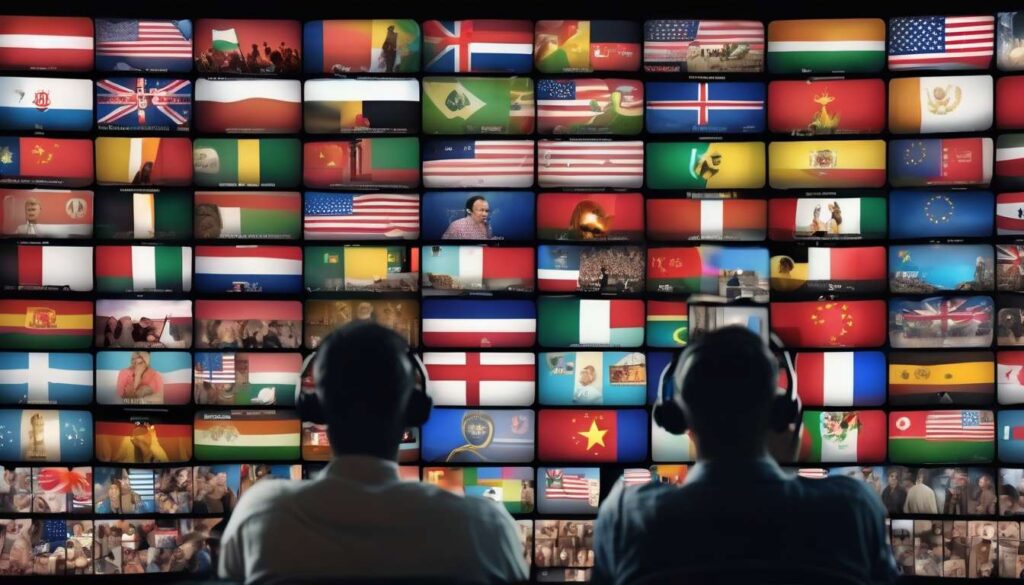
Aren’t we curious how a single translation can unlock millions of viewers?
Localization in adult video streaming raises questions about language, culture, and consumer behavior. We examine whether subtitles, dubbed audio, and culturally adapted metadata do more than translate words — whether they rebuild trust, respect local norms, and reshape how content is discovered on platforms.
Compliance versus creative freedom. We consider the interplay between adhering to regional regulations and preserving creators’ artistic intent, exploring tensions and possible compromises.
Payment options, UX localization, and marketing shape willingness to subscribe.
- Payment methods aligned with local preferences can remove friction.
- Localized user interfaces and copy increase comfort and engagement.
- Targeted marketing that respects cultural norms boosts conversion and retention.
Case studies: successes and failures.
- Examples where tailored content and localization increased retention and growth.
- Instances where tone-deaf localization provoked backlash and harmed brand trust.
Focus on practical strategies and measurable outcomes.
- Assess local language and cultural needs via research and testing.
- Prioritize compliant metadata, moderation rules, and age-gating where required.
- Implement local payment options and UX adjustments to reduce churn.
- Localize marketing while validating cultural fit through A/B tests and focus groups.
- Measure retention, conversion, and brand sentiment to iterate on localization efforts.
Thoughtful localization does more than grow audiences. It can foster safer, more respectful access to adult content across diverse markets by balancing compliance, cultural sensitivity, and user experience.
Market Opportunity Mapping
Goal: Map where localization can unlock demand by identifying high-traffic regions, language gaps, and platform behaviors we can realistically serve.
Approach
- Analyze traffic sources, device patterns, and demographic clusters to spot underserved pockets where adult localization will move the needle.
- Include team members and partners in market selection so choices align with our capabilities and values.
Monetization & Compliance
- Prioritize regions with straightforward payment compliance or where compliant solutions can be implemented cost-effectively.
- Rate markets by compatibility with our tech stack and content policies to ensure monetization is reliable.
Cultural Adaptation
- For each candidate market, document necessary cultural adaptation, including:
- Interface tone
- Imagery guidelines
- Service expectations
Collaboration & Rollout
- Share metrics, risks, and a clear rollout sequence to invite collaboration and build confidence.
- Outcome: Practical, compliant, and culturally aware localization that creates real opportunities for sustainable growth.
Language and Subtitle Strategy
Prioritization approach
We’ll prioritize language and subtitle choices based on traffic data, user language preferences, and conversion lift potential to maximize reach while keeping production efficient.
We’ll analyze viewer geographies, search terms, and watch times to pick primary and secondary languages, ensuring subtitle efforts go where they move metrics.
We want everyone to feel included, so we’ll offer language bundles that reflect community size and engagement rather than spreading resources thin.
Styling, consistency, and compliance
We’ll standardize terminology and style guides for translators to keep voice consistent across catalogues.
We’ll tie subtitle workflows to compliance checkpoints for payment compliance and regional regulations.
Formats and quality control
We’ll use scalable subtitle formats and human-reviewed machine drafts to balance speed and quality.
For adult localization, we’ll prioritize privacy-forward delivery and secure handling of localization assets to protect creators and users alike.
Measurement, iteration, and communication
We’ll measure subtitle impact on retention and conversion, iterate quickly, and communicate changes transparently so partners and users feel ownership of the experience.
Implementation notes (key steps)
- Analyze traffic and engagement data to rank language priority.
- Define language bundles based on community size and engagement metrics.
- Create and enforce translator style guides and terminology glossaries.
- Implement compliance checkpoints in subtitle workflows.
- Adopt scalable formats (e.g., timed-text) and machine+human review pipelines.
- Enforce privacy and security controls for adult content localization assets.
- Track retention/conversion metrics, run experiments, and publish results to stakeholders.
Cultural Adaptation Practices
We’ll adapt content and messaging to local norms, taboos, and humor to make experiences feel natural and respectful in each market.
We center cultural adaptation as a continuous, collaborative process.
- Researching local values.
- Engaging native creators.
- Testing tone with target audiences.
In adult localization, this means adjusting imagery, scenarios, and language to reflect intimacy styles and privacy expectations while preserving creator authenticity.
We also align user journeys with local payment and compliance expectations.
- Offering familiar billing flows.
- Providing clear receipts.
- Using privacy‑forward consent prompts.
Our teams map cultural triggers and legal-adjacent sensitivities to avoid missteps and to build trust.
- Iterating on community guidelines.
- Evolving moderation practices based on local feedback.
By treating cultural adaptation as integral to product design—not an afterthought—we create welcoming spaces where diverse members:
- See themselves represented.
- Feel safe transacting.
- Are more likely to stay engaged and refer others.
Regulatory Compliance Frameworks
We’ll build clear, scalable regulatory compliance frameworks that map local laws, age‑verification requirements, content restrictions, and data protections to our product and moderation workflows.
We’ll create shared playbooks so teams across markets feel included and confident.
- Legal summaries.
- Decision trees for takedowns.
- Audit trails that tie moderation actions to specific statutes.
We’ll integrate adult localization into these playbooks, ensuring language choices and labeling meet both legal and community expectations.
We’ll standardize age‑verification protocols and privacy controls so every member of our team knows what to enforce and why.
We’ll coordinate with partners to verify payment compliance standards align with regional rules without fragmenting the user experience.
We’ll train moderators and engineers together, running tabletop exercises that reflect local enforcement scenarios and cultural adaptation nuances.
We’ll measure compliance through regular reviews and shared KPIs, inviting feedback from local teams to iterate.
By making compliance collaborative, transparent, and operational, we’ll protect users, creators, and the business while building trust across diverse markets.
Payment and UX Localization
We will localize payment methods, pricing, and purchase flows to match regional preferences, regulations, and device habits so users can pay quickly and confidently.
We design unified yet flexible checkout experiences that reflect local payment rails, mobile wallets, and common card networks, reducing friction and abandoned carts.
We embed adult localization best practices to ensure wording, billing descriptors, and consent screens respect cultural norms while keeping transparency.
We prioritize payment compliance across jurisdictions by integrating age verification, tax handling, and data residency where required so users feel safe and understood.
We A/B test localized layouts and microcopy to learn what builds trust in each market, then iterate quickly with analytics-driven tweaks.
Our UX choices are guided by cultural adaptation, accessibility, and device usage patterns so every user feels included.
- Button placement and tap targets optimized per platform and culture.
- Clear explanations for recurring billing and subscription changes.
- Accessible flows for assistive technologies and low-bandwidth devices.
We collaborate with local partners and payment processors and share clear dispute flows to support growth and long-term relationships.
- Use concise, respectful language in all customer-facing messages.
- Provide local-language support and dispute resolution channels.
- Maintain consistent billing descriptors and receipts to reduce chargebacks.
Marketing and Acquisition Tactics
We will tailor acquisition strategies to each market’s channels, regulations, and user behaviors to drive scalable, compliant growth. This includes paid search, affiliate programs, organic content, and influencer partnerships — all adapted to local dynamics rather than applied uniformly.
We will prioritize adult localization so messaging, creatives, and landing experiences feel native and invite users to belong rather than feel like outsiders. This covers language, tone, imagery, and UX choices that reflect local expectations.
We will align campaigns with local payment compliance to reduce churn and build trust.
- Promote accepted payment methods.
- Use clear billing descriptors.
- Ensure monetization flows comply with regional regulations.
We will work closely with regional affiliates and creators who understand cultural adaptation.
- Ensure imagery, tone, and calls to action respect local norms.
- Maintain effectiveness while avoiding cultural missteps.
We will centralize playbooks that map channels to lifecycle stages, then let local teams adapt within guardrails.
- Create centralized channel-to-stage mappings and legal/brand guardrails.
- Allow local teams to adapt assets for culture and compliance.
- Enforce review points to maintain safety and consistency.
We will test variations in language, visuals, and promotional mechanics, and scale only what meets retention and compliance thresholds.
- Run A/B and multivariate tests.
- Measure retention, monetization compliance, and customer satisfaction.
- Scale only approaches with strong retention and compliant revenue.
We will keep acquisition collaborative and knowledge-sharing across markets so our community of users feels seen, respected, and reliably served.
Performance Measurement Metrics
We’ll measure performance with a focused set of KPIs that tie acquisition channels, localization quality, and compliance to retention and revenue outcomes.
We track engagement rates, time-on-site by locale, and churn segmented by language and content category to see how adult localization impacts user behavior.
Conversion funnels include localized landing-to-subscription rates and A/B tests of translated creatives so we can iterate quickly.
We also monitor payment compliance metrics:
- Successful transaction rates by region
- Failed payments due to local methods
- Dispute volumesThese ensure revenue integrity and trust.
Quality scores for cultural adaptation include:
- User feedback
- Translation accuracy audits
- Rates of content flaggingThese help balance authenticity with safety.
Reporting combines these indicators into dashboards that our teams review weekly, so everyone feels ownership of outcomes.
By aligning acquisition, localization, and compliance KPIs, we create a shared roadmap that supports sustainable growth and makes contributors in every market feel seen, respected, and accountable.
Case Studies and Learnings
Case study 1 — Adult localization with a regional studio
What we did
- Partnered with a regional studio to apply adult localization: translated metadata, localized thumbnails, and community-focused themes.
Outcome
- Session length rose 22%.
- Churn fell.
Key insight
- Respectful cultural adaptation builds loyalty when people feel seen.
Case study 2 — Onboarding and acquisition for a multilingual market
What we did
- Redesigned onboarding and acquisition funnels.
- Aligned offers and messaging to local norms.
Outcome
- Conversions improved 18%.
- Lifetime value climbed as subscribers stayed longer.
Key insight
- Belonging drives revenue.
Case study 3 — Payment compliance and regional billing
What we did
- Prioritized payment compliance and regional billing options.
- Implemented local payment methods and clearer receipts.
Outcome
- Failed payments reduced by 35%.
- Many subscriptions were saved.
Key insight
- Local payment options and transparent billing materially reduce churn.
Cross-case learnings
- Iterate quickly.
- Measure outcomes.
- Center users’ cultural context.
Overall conclusion
- Culturally aware product and business decisions grow retention and revenue responsibly and sustainably.
How do you ensure the voices and perspectives of performers from different cultures are respected and fairly represented when creating localized adult content?
Goal: Ensure performers’ voices and perspectives are respected and fairly represented when creating localized adult content.
Center performers by listening and involving them directly.
- Actively solicit performers’ input on scripts, dialogue, tone, and character portrayal before and during localization.
- Include performers in decision-making about translation choices, cultural references, and any changes that affect their on-screen persona.
Compensate fairly and transparently.
- Pay performers for localization-related work such as advising, re-recording lines, and reviewing localized edits.
- Offer clear, written agreements detailing compensation, usage rights, and any royalties or residuals tied to localized versions.
Use cultural consultants and translators who share performers’ backgrounds.
- Hire translators and cultural consultants with lived experience of the performer’s culture, language, or community.
- Ensure consultants are compensated and credited for their contributions.
Obtain and document informed consent.
- Explain localization processes clearly (what changes may be made, where localized versions will be distributed).
- Get written consent for specific edits, dubbing, subtitling, and distribution channels; allow performers to withdraw consent within agreed limits.
Offer choice and collaborative creative control.
- Provide options for edits and let performers approve final localized dialogue, voice matches, or subtitle phrasing.
- Use collaborative sessions (e.g., review screenings, recording sessions with performer input) so performers retain meaningful creative influence.
Train staff on cultural sensitivity and ethics.
- Implement regular training for translators, editors, producers, and customer-facing staff about cultural competence, power dynamics, and consent.
- Include scenario-based learning focused on respectful representation and avoiding stereotyping.
Maintain transparent feedback channels and ongoing adjustments.
- Create accessible channels for performers to raise concerns, suggest changes, or report misrepresentation.
- Respond promptly and document resolutions; incorporate performer feedback into future localization workflows.
Prioritize performer safety and dignity.
- Protect performers’ privacy and boundaries when translating or promoting localized content.
- Avoid coercive practices and ensure performers never feel pressured to accept changes.
Monitor, audit, and improve practices.
- Regularly review localization outcomes with performers and consultants to identify harm or misrepresentation.
- Adjust policies and contracts based on lessons learned and performers’ input.
By centering listening, fair pay, shared cultural expertise, informed consent, collaborative control, staff training, transparent feedback, and continuous improvement, you create localized adult content that respects performers’ voices, perspectives, and dignity.
What strategies can platforms use to prevent and address exploitation or trafficking risks uncovered during localization efforts in new regions?
Preventing and addressing exploitation or trafficking risks uncovered during localization requires a multi-layered approach.
Strict verification and partner vetting.
- Implement robust identity and credential checks for users, partners, and vendors.
- Require documented due diligence for third-party partners and local suppliers.
- Use digital verification tools and manual spot-checks to reduce forged or fraudulent accounts.
Partner with local NGOs and law enforcement.
- Establish formal partnerships with community organizations experienced in anti-trafficking and victim support.
- Create information-sharing protocols with law enforcement while respecting survivor privacy and safety.
- Coordinate referrals so survivors receive timely, culturally appropriate assistance.
Train staff to spot red flags.
- Provide mandatory, role-specific training on trafficking indicators and safe engagement practices.
- Include scenario-based exercises and refresher courses.
- Empower staff to escalate concerns quickly through clear internal channels.
Offer safe reporting channels and support services.
- Maintain multiple confidential reporting options (in-app, hotline, email) with language and accessibility support.
- Ensure reports can be submitted anonymously and that reporters are protected from retaliation.
- Link affected individuals to immediate psychosocial, medical, legal, and shelter services through partner networks.
Immediate takedown and risk-mitigation procedures.
- Implement rapid-response protocols for removing content, listings, or accounts tied to suspected exploitation.
- Temporarily suspend associated accounts pending investigation to prevent further harm.
- Preserve evidence securely for investigations and potential legal action.
Audit supply chains and use independent audits.
- Conduct regular internal and third-party audits of suppliers and localization partners.
- Require corrective action plans for non-compliance and monitor implementation.
- Use unannounced audits in high-risk contexts to ensure ongoing compliance.
Commit to survivor-centered remediation and transparency.
- Prioritize survivor safety, consent, and confidentiality in any remediation or restitution processes.
- Offer reparative measures (financial, services, or reunification support) designed with survivor input.
- Publish transparent summaries of incidents, responses, and learnings while protecting identities.
Continuous community consultation and feedback.
- Engage local communities, survivors, and civil society in the design and evaluation of localization processes.
- Use feedback loops to refine policies, reporting mechanisms, and support services.
- Regularly publish progress, metrics, and policy updates to build trust and demonstrate accountability.
By combining rigorous verification, local partnerships, staff training, safe reporting and rapid takedown, thorough audits, survivor-centered remediation, and ongoing community consultation, platforms can better prevent and respond to trafficking and exploitation risks discovered during localization.
How should companies handle requests from local governments or advocacy groups to remove or restrict content that is culturally sensitive but legally permitted?
We’ll treat the question about government or advocacy requests for culturally sensitive but legal content with care and respect.
We’ll listen, evaluate legal obligations, and weigh community norms against free expression.
We’ll be transparent about criteria, offer content warnings or geoblocking where appropriate, and seek dialogue with requesters.
When removal’s necessary for safety or law, we’ll act; otherwise we’ll aim for proportional, inclusive solutions that keep stakeholders informed and involved.
Conclusion
Localization unlocks new audiences and revenue by aligning language, culture, regulations, payments, and UX to target markets.
Tailor content and user experience by adapting subtitles, content cues, and marketing while ensuring compliance and smooth transactions. This reduces friction and builds trust.
Measure and optimize by tracking acquisition, retention, ARPU, and legal metrics to guide improvements.
Start small and scale responsibly:
- Start with a minimal, focused launch in a target market.
- Iterate with local partners to validate and refine.
- Scale what works across additional regions.
Outcome: expand responsibly and profitably into new regions.